I know that comprehensive information is a protective factor. When individuals understand themselves, how they can connect in mutually beneficial ways, have people who are knowledgeable to go to for support, and the conduct expected within society, they can thrive.
Who I Serve
Coaches
Youth Serving Organizations
Parents Guardians & Caregivers
Schools [public, charter, home]
Folks with intellectual and/or developmental disAbilities
I am bringing my experience as a classroom teacher to the virtual space. Individuals choose to home-school, send their children to a charter school, or a public school for various reasons. No matter where one is being educated, they should have access to comprehensive sexual health information.
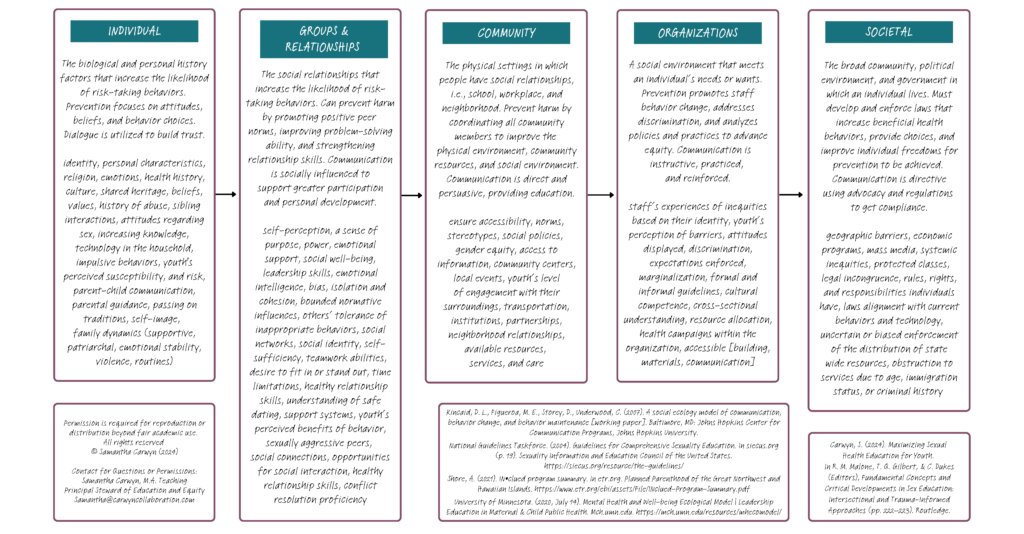
An individual’s access to comprehensive sexual health information may be targeted, supported, or protected. Socio-ecological models outline the interrelated factors that influence negative or positive outcomes. This model highlights distinct influences on risk-taking behavior across different contexts, including personal characteristics, compound factors, health views, and specific skills ultimately supporting individuals in applying their knowledge to achieve healthy sexual development outcomes.
Utilizing a prevention mindset, I designed this socio-ecological model focused on sexual health, informed by my professional experience and integrating aspects of four other established models. Model is featured in my chapter, Maximizing Sexual Health Education for Youth. The chapter is in Part Four of the book Fundamental Concepts and Critical Developments in Sex Education: Intersectional and Trauma-Informed Approaches.